Push Pull Connector Supplier Capability Verification: A Delivery Assurance Checklist
A push pull connector supplier can be verified before a production order is placed — but only if the buyer asks for the right documents in the right order. Certification scope, contact plating, insulator material, sealing class, disclosed capacity and acceptance terms can all be confirmed in writing within days. What most medical and industrial buyers never do is test whether those documents contradict the production parameters the supplier actually runs on the floor. That gap is where delivery failures are born.
This checklist converts capability claims into verifiable evidence. It is written for buyers at the decision and execution stage: the point where a shortlist exists, a sample may already be on the bench, and the real question is no longer who can make this connector but who will still be making it to the same standard in eighteen months.
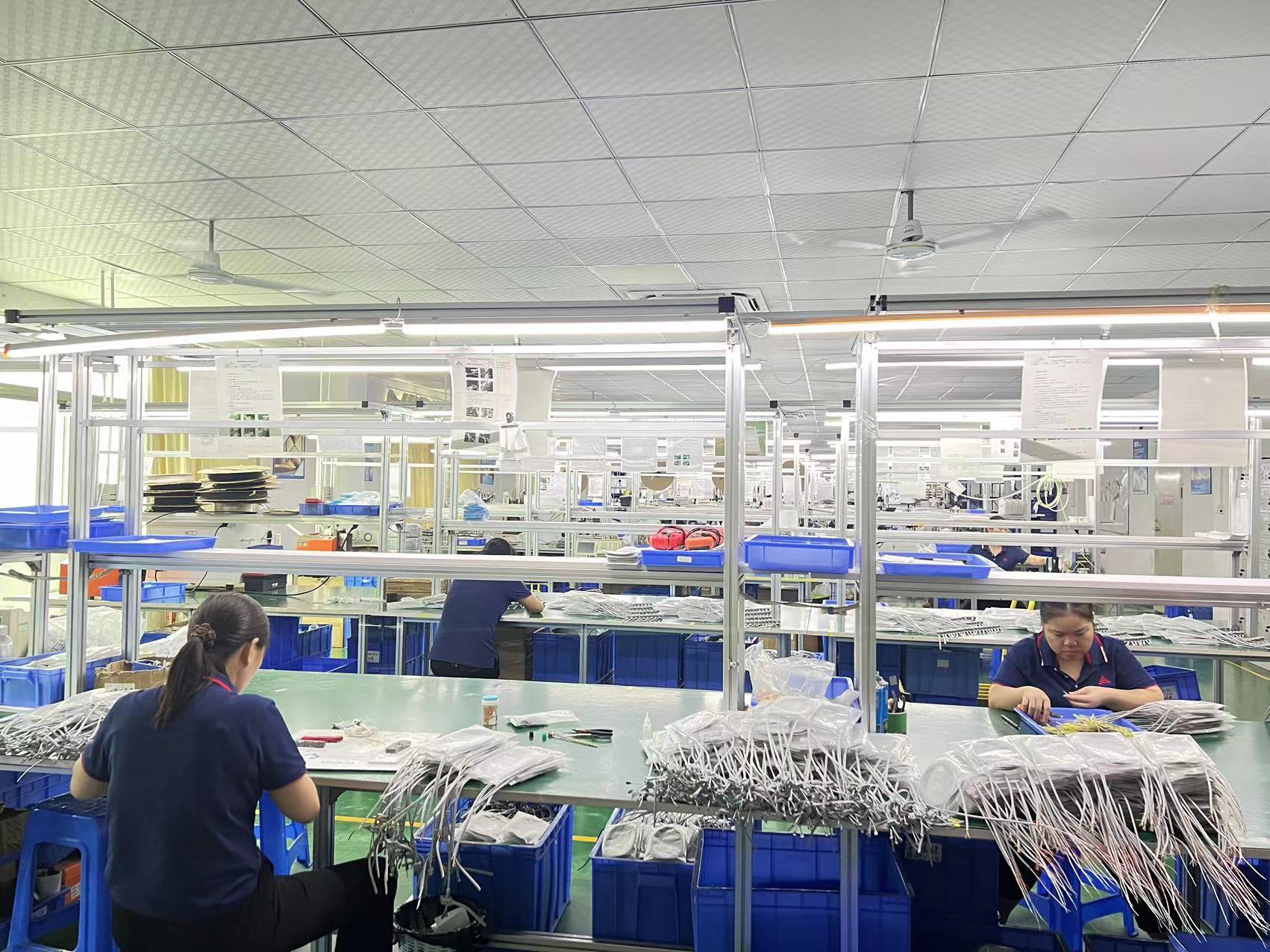
Cover: production floor — the physical surface a capability audit has to be able to explain.
Why Capability Claims Are So Hard to Verify
The circular push-pull connector market was valued at USD 2.2 billion in 2026 with a CAGR of 5.49%, and the broader medical connector market reached US$1.74 billion in 2025. Growth of that shape attracts capacity — and capacity claims are the easiest thing in the connector industry to write and the hardest thing to check.
Three structural features make verification difficult.
First, standards only cover part of the claim. IEC 61076-2-010:2021 defines M12 push-pull connectors with inner and outer locking. IEC 61076-2-012 specifies circular connectors with an inner push-pull locking mechanism, sized to remain compatible with M12 screw-locking interfaces. A supplier can cite these standards correctly and still deliver a connector whose plating thickness, insulator resin or assembly torque is nowhere near what the application needs. Standard compliance tells you the interface will mate. It does not tell you the product will survive your sterilization cycle or your vibration profile.
Second, published specifications are envelopes, not commitments. M12 push-pull product families in the market are routinely published with IP65/IP67 sealing, tool-free mating, and data rates up to 10 Gbps with power variants reaching 16 A and 690 V. Push-pull connectors as a category are published at 5000+ mating cycles. Medical variants are expected to withstand autoclave, Sterrad, EtO, gamma and chemical sterilization, with sealing up to IP68 in some product lines. Every one of these numbers is real — and every one of them is attached to a specific product series, a specific test method and a specific configuration. Lift the number out of that context and it becomes marketing.
Third, delivery reliability is invisible in a catalogue. A datasheet can describe a contact system. It cannot describe whether the supplier's OQC station rejects a batch, whether the CNC programme that produced your last shipment is the one running today, or whether a 15-day inspection window is actually honoured when a defect appears.
The consequence for buyers is predictable. Supplier audits focus on certificates, certificates focus on scope, and the delivery question — will the same product arrive, at the same parameters, on the promised date, next quarter — stays unanswered until the first late shipment.
The Six-Part Capability Verification Checklist
A delivery assurance audit has six layers. Each one produces a document you can file, compare across suppliers, and re-check at the next order. Skipping a layer is what turns a supplier evaluation into a price negotiation.
1. Certification and Compliance Validation
Ask for certificate numbers and issuing bodies, not certificate logos. A quality management certificate such as ISO 9001 and a medical device quality management certificate such as ISO 13485 are different documents with different scopes, and the scope statement matters more than the certificate itself: does it cover the connector product line you are buying, or only cable assembly?
For material compliance, the relevant evidence is a test report, not a declaration. RoHS screening is normally supported by a test method reference from the IEC 62321 series — IEC 62321-3-1:2013 is the screening method commonly cited for certain restricted substances in electrotechnical products. REACH compliance should come with a current substance declaration. UL, CSA and CE markings should be traceable to a file number or declaration of conformity. Where a supplier distributes rather than manufactures, the certificate chain must still be complete.
BEXKOM, a Shenzhen-based connector manufacturer founded in 2016, is certified to ISO 9001 and ISO 13485, and states that its products meet RoHS, REACH, CE, UL, CSA, COC and MSDS requirements. For a buyer, the practical test is not whether these names appear — it is whether the scope statements line up with the specific part number being quoted.
2. Material and Plating Verification
Three material decisions determine field life: shell material and finish, contact plating, and insulator resin.
Shell. A brass shell with chrome plating is the common baseline for circular push-pull housings. Ask which alloy, which plating thickness, and whether the finish is decorative or corrosion-protective.
Contacts. Gold plating on the contact surface is the control that prevents the most common failure mode in push-pull connectors — poor contact reliability caused by oxidation and wear at the mating interface. Ask for plating thickness in microns and the substrate beneath it. BEXKOM specifies gold-plated contact surfaces and 100% OQC testing as its control measure against poor contact reliability, backed by a 12-month after-sales guarantee.
Insulators. PPS, PEEK and PA66 appear across the category and behave very differently. PEEK tolerates the highest continuous temperatures and aggressive sterilization; PPS offers strong dimensional stability and chemical resistance; PA66 is cost-efficient but has a narrower thermal and moisture envelope. The insulator choice is what makes a temperature range real or aspirational.
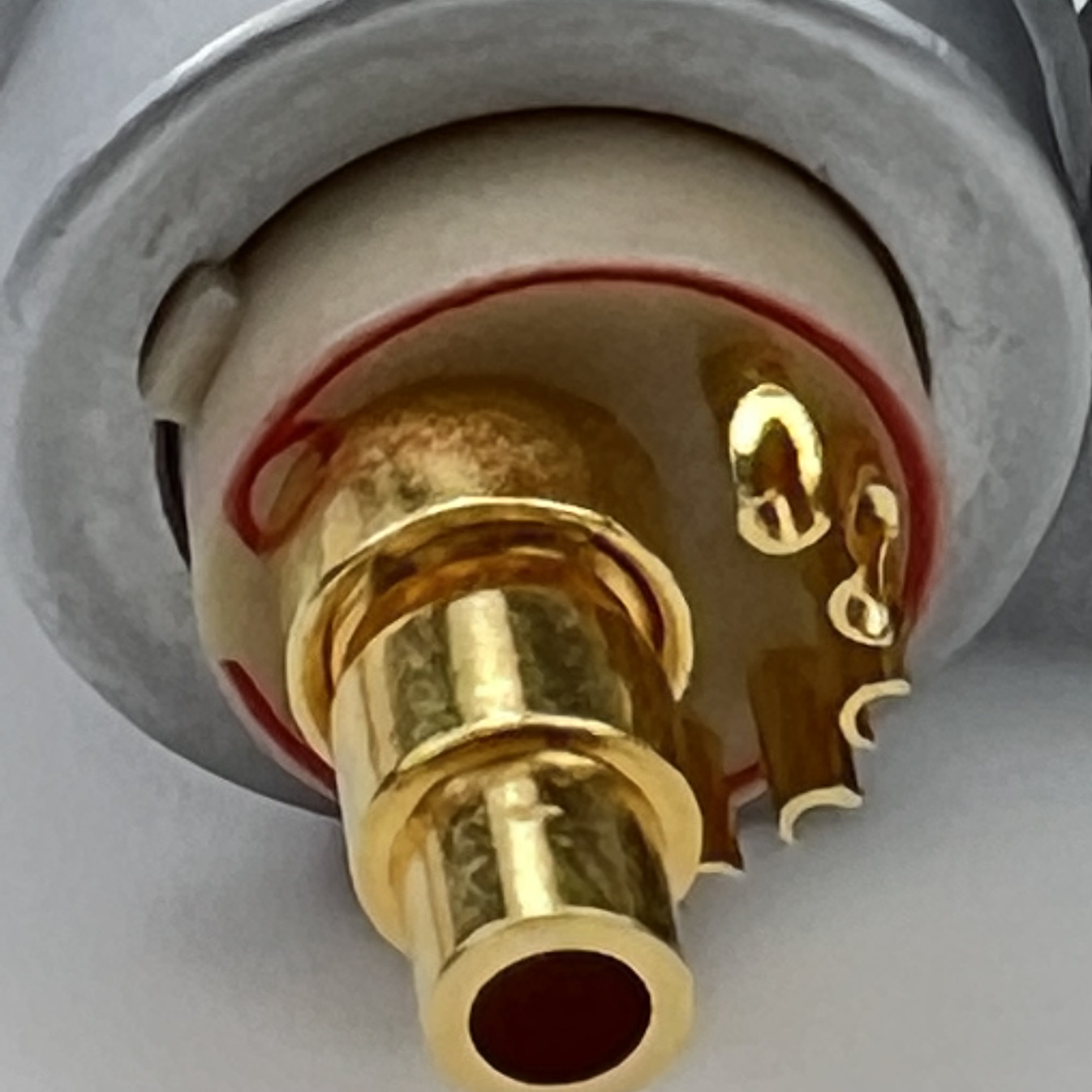
Contact plating is a physical, inspectable fact — not a claim that needs to be taken on trust.
3. Electrical and Mechanical Parameter Confirmation
Confirm each parameter against the datasheet for the exact part number, then against the drawing, then against the sample. Common catalogue envelopes in the category run from 2 to 48 contacts, with current ratings from 1.5 A to 25 A depending on contact size and pin count. A 48-pin configuration and a 2-pin configuration rarely share the same current rating even inside one product family, so a single headline number is not a specification.
Mating cycle rating deserves the same treatment. A category-level figure such as 5000+ mating cycles describes the connector type, not your part number. Ask for the series-level value and the test condition. BEXKOM's P-Series medical connectors are published at 2 to 26 pins with more than 2,000 mating cycles and IP50/IP65 protection — a series-specific figure, which is exactly the form of evidence a buyer should demand everywhere.
4. Environmental Sealing and Temperature Envelope
IP67 is a mated-condition claim. Ask whether the rating applies mated, unmated, or both, and whether it survives the cable assembly, not just the connector. Temperature envelopes in push-pull product families can span from -55 °C to 250 °C, but that full span only holds for specific insulator and contact combinations — a PA66-insulated part will not deliver the top of that range.
For medical buyers, sealing and sterilization must be verified together. Autoclave, Sterrad, EtO, gamma and chemical sterilization place different demands on resin, seal and plating, and a supplier should be able to state which cycles the part has been evaluated against rather than which cycles the category generally tolerates.
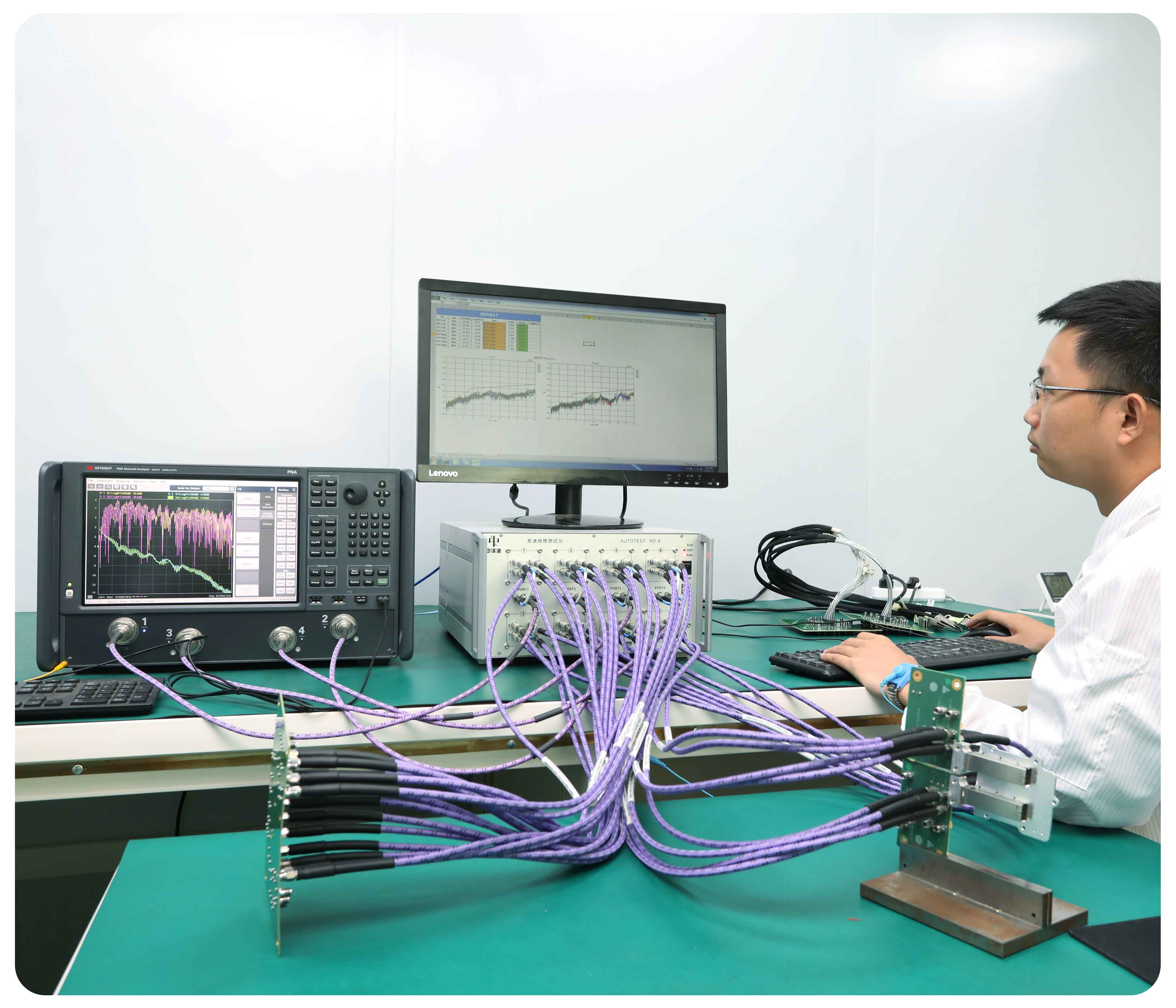
Reliability testing links a published parameter to an actual measurement.
5. Quality System and Production Consistency
This is the layer that determines delivery assurance, and the one buyers most often compress into a plant tour.
Ask four questions. Which inspection gate rejects non-conforming product — incoming, in-process, or outgoing? What percentage of units pass through that gate? Has the production programme for your part number changed since the last order? And what happens, procedurally, when a batch fails?
BEXKOM's answer is a 100% OQC testing regime on finished connectors, supported by in-house control of connector development, mould design, reliability testing, injection moulding, CNC machining and automated assembly. Vertical control of those steps is what allows a supplier to hold production parameters constant across orders — the actual mechanism behind consistent delivery.
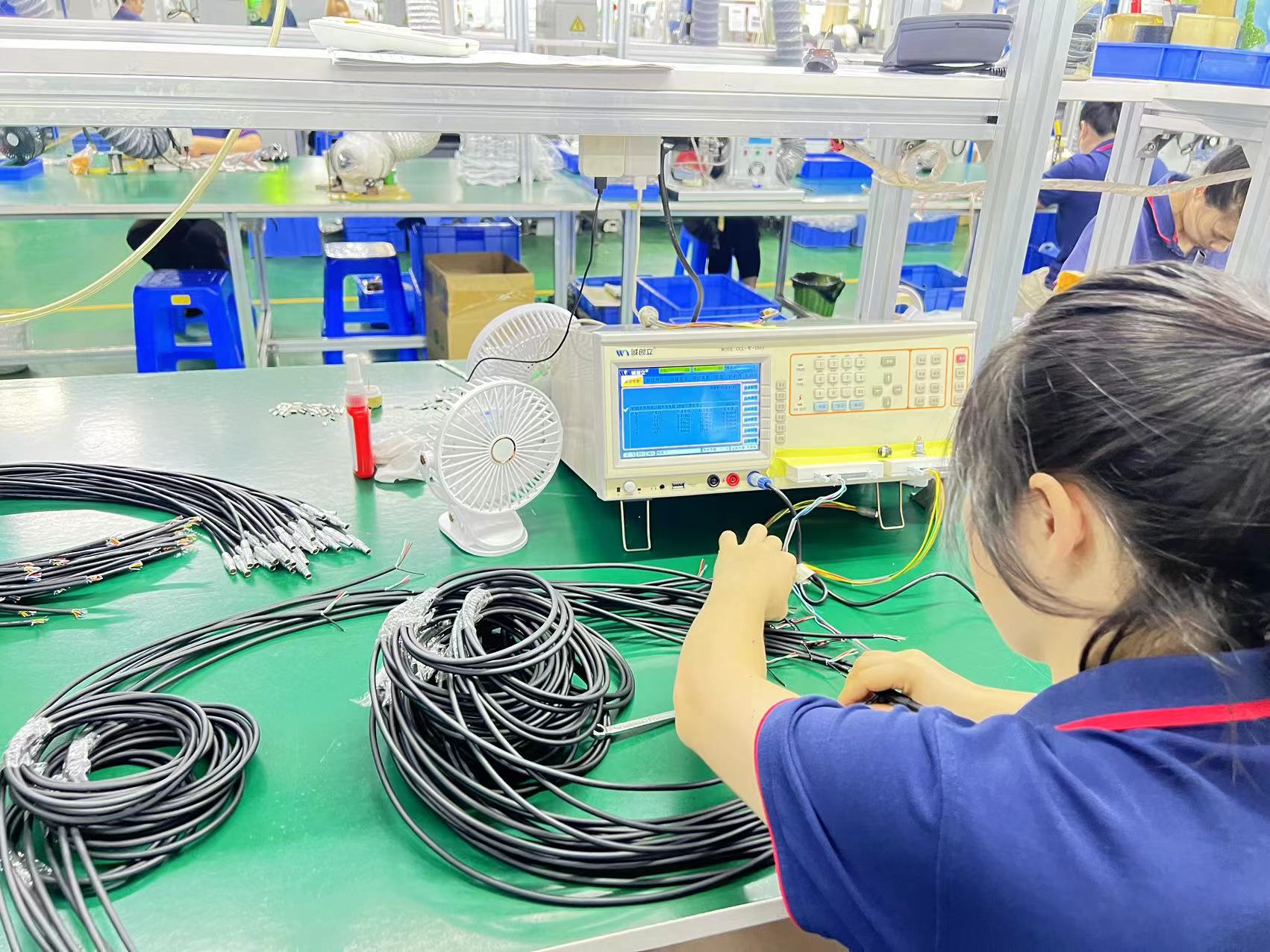
Outgoing inspection is the last gate before a delivery commitment becomes a delivery outcome.
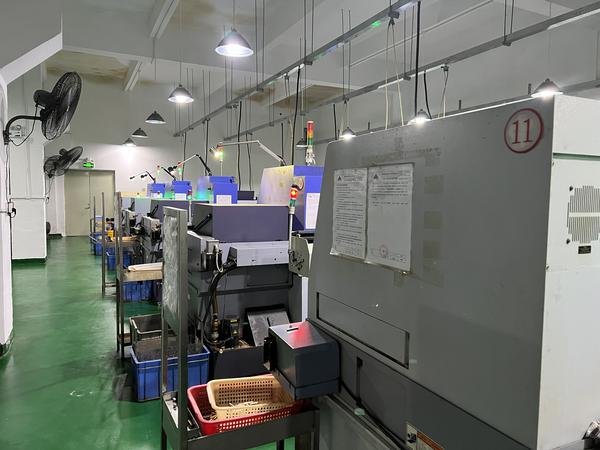
Machining capacity and programme stability sit behind every repeat-order promise.
6. Delivery, Capacity and Commercial Terms
Capacity should be disclosed in the same units you order in. BEXKOM states a monthly production capacity of 200,000 units, an annual output of 2,000,000 units, a 3,500 m² facility and 130 employees, with 22 engineers in R&D and 75% of output exported to the EU and USA.
Commercial terms should be written into the quotation, not agreed verbally. BEXKOM's standard terms list a minimum order quantity of 1 unit, delivery terms of FOB, C&F, CIF, DAP, DDP or EXW, acceptance criteria of pre-shipment test plus a 15-day inspection period, and payment by T/T, PayPal or credit card. That 15-day inspection window is the single most useful line in the document: it converts a quality claim into a contractual right.
Step-by-Step: Running the Verification in Ten Working Days
The checklist only works if it is sequenced. Requests sent in parallel produce documents that cannot be cross-checked against each other.
Days 1–2 — Request the document pack. Ask for the ISO 9001 and ISO 13485 certificates with scope statements, RoHS and REACH reports with test method references, UL/CSA file numbers, the datasheet for the exact part number, and the drawing revision.
Days 3–4 — Cross-check certificates against the part number. Confirm the certified scope covers the product line being quoted. A certificate that covers cable assembly but not connector moulding does not verify the connector.
Days 5–6 — Verify material and parameter claims. Compare the datasheet, the drawing and the quotation line by line. Any figure that appears in one document and not the others is a question, not a specification.
Days 7–8 — Request a sample against the drawing. Measure plating, pin count, current rating witness points, sealing class and temperature rating on the physical part. BEXKOM runs a dedicated sample design team and pilot production line and typically delivers prototypes within two weeks, which sets a realistic expectation for how long this step should take.
Days 9–10 — Confirm capacity, terms and the change-notification rule. Get the capacity figure in writing, confirm the acceptance window and payment terms, and agree in writing that any change to material, process or subcontractor will be notified before shipment.
That last clause is what elevates the exercise from an audit to a delivery assurance system. Most late-stage surprises are not caused by a supplier who cannot meet the specification — they are caused by a supplier who changed something and did not say so.
What Verified Capability Looks Like in Practice
The verification framework above is only credible if it maps onto real programs. Two application references show how the checklist behaves under actual buyer constraints.
Medical monitoring — ECG projects in the United States. Product 3625 has been supplied into US ECG monitoring programs. The verification path for a program of this type runs through ISO 13485 scope, contact plating and insulator resin (both of which determine patient-side signal stability and cleaning tolerance), sealing class under repeated wipe-down, and a documented OQC gate that can be pointed to during a supplier audit. Buyers in this segment typically weight certification scope and plating evidence above unit price, because a field failure in a monitoring application is not a returns cost — it is a clinical event.
Industrial automation — robots in Germany. Product 3727 has been supplied into German automation robot applications. Here the verification path shifts toward mating cycle rating at the series level, locking mechanism durability under vibration, temperature envelope across the duty cycle, and — critically — repeat-order consistency. A robot integrator does not buy a connector; they buy the same connector for every unit built over several years. That makes change-notification, programme stability and disclosed monthly capacity the deciding evidence, not the datasheet headline.
In both cases, the supplier's role is the same: convert a specification into a repeatable production parameter and then hold it. That is what BEXKOM's combination of in-house mould design, CNC machining, injection moulding and 100% OQC testing is designed to support, and it is the reason the company's stated customer base spans more than 2,000 customers across 60+ countries, with over 30 new custom projects taken on each year.
Comparison: What Buyers Can Actually Verify Across Suppliers
The table below compares BEXKOM with three European push-pull connector suppliers on the dimensions a buyer can verify from documents and stated terms. Relative price and lead-time positions are as published in BEXKOM's comparison data. Where a supplier's certification scope is not stated in the sources reviewed, the table says so rather than implying an absence.
| Verification dimension | BEXKOM | ODU | Fischer Connectors | LEMO |
|---|---|---|---|---|
| Documented quality certification | ISO 9001 and ISO 13485 | Not stated in sources reviewed | Not stated in sources reviewed | Not stated in sources reviewed |
| Material compliance evidence | RoHS, REACH, CE, UL, CSA, COC, MSDS | Request per part number | Request per part number | Request per part number |
| Relative price position | Baseline | BEXKOM positioned ~50% lower | BEXKOM positioned ~50% lower | BEXKOM positioned ~50% lower |
| Stated lead time | Prototypes typically within 2 weeks | Compared at 1–2 weeks | Compared at 2 weeks | Compared at 3–7 days |
| Tooling | In-house mould design, 30+ custom projects per year | Not stated in sources reviewed | Not stated in sources reviewed | Free tooling design offered against BEXKOM equivalents |
| Disclosed capacity | 200,000 units per month | Not stated in sources reviewed | 50+ years in push-pull connectors; volume not stated | Not stated in sources reviewed |
| Series coverage | B, P, K, S, T equivalents; P-Series medical 2–26 pins | Full range | Full range | Full range |
| Acceptance terms | Pre-shipment test + 15-day inspection period | Negotiate per contract | Negotiate per contract | Negotiate per contract |
| Minimum order | 1 unit | Negotiate per contract | Negotiate per contract | Negotiate per contract |
Note: relative price and lead-time positions reflect published comparison data and should be re-quoted per part number. A “not stated” entry means the source reviewed did not disclose the item; it is not a finding of non-compliance.
Frequently Asked Questions
Which certifications should a push pull connector supplier be able to document?
At minimum: an ISO 9001 certificate with a scope statement covering connector manufacturing, an ISO 13485 certificate if the parts are used in medical devices, a RoHS test report referencing a recognised test method such as those in the IEC 62321 series, a current REACH declaration, and traceable UL or CSA file numbers plus a CE declaration of conformity where applicable. BEXKOM is certified to ISO 9001 and ISO 13485 and states that its products meet RoHS, REACH, CE, UL, CSA, COC and MSDS requirements. The scope statement is the part to scrutinise — a certificate that covers cable assembly does not verify the connector moulding.
Can a supplier's stated production capacity be verified before ordering?
It can be reconciled, which is usually sufficient. Ask for capacity in the units you order in and cross-check it against headcount, shift pattern and equipment count disclosed during a factory review. BEXKOM discloses a monthly production capacity of 200,000 units, an annual output of 2,000,000 units, a 3,500 m² facility, 130 employees and 22 R&D engineers. A capacity figure that cannot be explained by the plant's stated equipment and staffing is the figure to challenge.
How do I compare price quotes without commissioning a full technical audit?
Normalise the quotes first: same part number, same plating thickness, same insulator material, same sealing class, same acceptance terms, same delivery basis. A quotation that omits plating thickness or insulator resin is not comparable to one that specifies both, and the price gap usually sits in exactly those two lines. For reference, BEXKOM's published comparison data positions its pricing roughly 50% below LEMO, ODU and Fischer Connectors equivalents, with tooling design offered free against LEMO-style parts. Treat any figure of that size as a hypothesis to test against the material specification, not as a settled conclusion.
What should a sample evaluation include before mass production?
A sample should be measured, not admired. Check plating thickness and substrate on the contacts, confirm pin count and current rating against the drawing, verify the insulator resin, test the push-pull locking action over repeated cycles, confirm the sealing class in the mated condition, and record the temperature rating on the exact configuration supplied. BEXKOM maintains a dedicated sample design team and pilot production line and typically delivers prototypes within two weeks, so the sample stage should not become the critical path. Once the sample is approved, freeze the drawing revision in writing — that revision is what every later shipment is measured against.
What lead time commitments are realistic for push pull connector orders?
It depends on whether the part is catalogue or custom. For standard equivalents, BEXKOM's published comparison data cites 1–2 weeks against ODU, 2 weeks against Fischer Connectors and 3–7 days against LEMO, with a prototype lead time typically within two weeks for custom work. Commitments should be written with the delivery basis attached — BEXKOM quotes FOB, C&F, CIF, DAP, DDP or EXW — and paired with the acceptance criteria of pre-shipment test plus a 15-day inspection period, so that a late or non-conforming batch has a defined remedy. To run the checklist against a live requirement, request a sample or a quote at www.bexkom.com or email cs6@bexkom.com.
Conclusion: Delivery Assurance Is a Document Trail, Not a Promise
A push pull connector supplier is verified in the same order every time: certification scope first, materials second, parameters third, sealing and temperature fourth, quality system fifth, and capacity with commercial terms last. Each layer produces something you can file, compare and re-check. None of them require trusting a brochure.
The reason this matters more at the long-term end of the relationship than at the first order is simple. A first order tests whether a supplier can hit a specification once. A repeat order tests whether the production parameters behind that specification are stable — whether the CNC programme, the plating bath, the resin grade and the OQC gate are the same next quarter as they were last quarter. Buyers who verify capability at the document level, and then write change-notification into the contract, are the ones who stop discovering delivery problems at the loading dock.
Run the checklist against your next requirement
Request a sample, a quotation, or the full BEXKOM product catalogue. Documents, drawings and certification scope statements are provided with the quotation.
Email: cs6@bexkom.com | Tel: +86 400 9969691 | WhatsApp: +86 18681568601
Have Questions or Need More Details?
Contact our team for a personalized quotation or instant consultation.
Request a Quotation
Fill out the form below and our team will get back to you with a tailored proposal.
WhatsApp Direct Chat
Prefer to chat in real-time? Message us on WhatsApp for instant assistance & quick answers.
- Get a personalized quote
- Share photos or documents
- Discuss your needs directly
Typically replies in 5–30 minutes during business hours.