
Push-Pull vs M12 Screw Locking: A Project Decision Guide
For continuous-operation medical and industrial equipment, the choice between a push-pull connector and an M12 screw-locking connector is a project decision, not a preference. This head-to-head compares the BEXKOM BK-B-XXX push-pull series with the BK-M12-XXX M12 screw-locking series across locking method, pin count, current, temperature, ingress protection, materials, and compliance evidence.
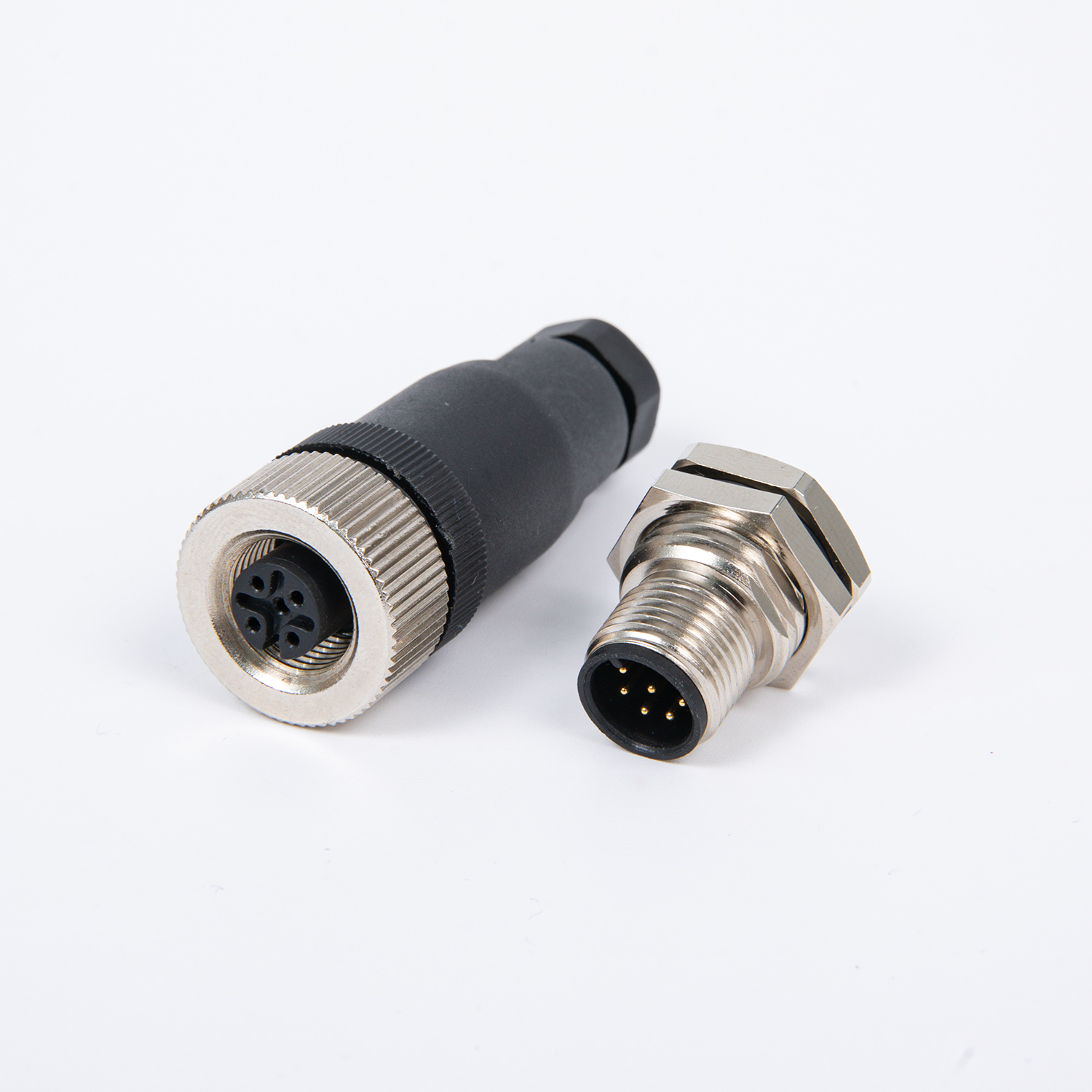
Push Pull Connectors are circular connectors that mate by pushing the plug into the receptacle and release by pulling the outer shell. The BEXKOM BK-B-XXX series is built around that push-pull self-locking principle. The BEXKOM BK-M12-XXX series uses a screw-locking M12 interface. Both are circular connector families, but they solve different project constraints.
The short answer is this: choose the BK-B-XXX push-pull series when the project needs a wider pin range, higher current, a wider temperature range, or a higher mating-cycle rating. Choose the BK-M12-XXX screw-locking series when the project needs IP67 protection, a compact 3–19 pin interface, and a threaded M12 connection for automation or industrial signal transmission. For a U.S. ECG monitoring project, the push-pull side is the more relevant starting point. For a German or EU automation robot project with continuous signal transmission and an IP67 requirement, the M12 side is the more relevant starting point.
This comparison is limited to the BEXKOM BK-B-XXX and BK-M12-XXX series. It does not evaluate Redel push pull connectors or other third-party families; those require their own datasheet and compliance review.
Problem Definition: the real decision behind push-pull vs M12
The phrase ‘push-pull vs M12’ hides the actual engineering question. The actual question is: which locking method and which electrical and environmental envelope will survive the service life of this device without creating a maintenance or validation problem?
A push-pull connector is designed for quick, tool-free mating and release. That matters in medical push pull connectors used on patient monitors, where a nurse or technician may need to connect and disconnect a cable repeatedly. It also matters in test and measurement, where an operator may cycle a cable several times per shift.
An M12 screw-locking connector uses a threaded coupling. The connection is made by rotating the coupling nut. That matters in industrial push pull connectors and automation equipment where the cable should remain mechanically secured and the interface should follow a familiar M12 installation pattern. The BEXKOM BK-M12-XXX is the screw-locking M12 series; it should not be confused with M12 push pull connectors, which are a separate standard family under IEC 61076-2-010 and IEC 61076-2-012.
There are two failure modes to test before selecting either family:
- Mismatch between the locking method and the service procedure. A push-pull connector that is never disconnected does not deliver its main workflow benefit. A screw-locking connector that is disconnected frequently adds a procedural step that must be controlled in training.
- Mismatch between the environmental rating and the actual environment. The BK-B-XXX data lists IP50, while the BK-M12-XXX data lists IP67. The term waterproof push pull connectors should always be tied to a specific IP rating and test condition, not used as a generic description.
The project brief should state four inputs before either series is shortlisted: pin count, current and voltage, operating temperature, and ingress protection. If those four inputs are not fixed, a specification comparison becomes a circular discussion.
Industry Background: why both interfaces remain relevant
Circular push pull connectors and M12 connectors both sit inside the same broad demand for reliable signal and power transmission in compact equipment. The verified market data used for this article values the global circular push-pull connectors market at USD 2.2 billion in 2026, with a CAGR of 5.49%. That figure describes the category, not any single supplier, but it explains why buyers continue to compare multiple interface families rather than standardising on one connector type.
M12 has a strong position in industrial automation because the interface family is standardised and widely used for sensors, actuators, data, and power. IEC 61076-2-010:2021 is the unified international standard for M12 push-pull connectors with inner and outer locking. IEC 61076-2-012 specifies circular connectors with an inner push-pull locking mechanism that is derived from and compatible with M12 screw-locking connectors and selected IEC 61076 M12 mating interfaces. Those standards matter because they separate a genuine M12 interface from a connector that merely looks similar.
Push-pull circular connectors have a different centre of gravity. They are used where high mating cycles, quick connection, and a compact circular footprint are important. Norcomp states that push-pull connectors are suitable for instrumentation and medical markets where high mating cycles and quick connections are critical, and that medical connectors may require sterilization resistance and IP ratings up to IP68. That is a category-level statement, not a BEXKOM product claim. It explains why medical push pull connectors are often evaluated on mating cycles and material compatibility, not only on pin count.
Shenzhen BEXKOM Electronics Co., Ltd. is a connector manufacturer established in 2016 and based in Shenzhen, China. BEXKOM operates a 3,500 m² facility with approximately 130 employees and a 22-engineer R&D team, and it specialises in push-pull self-locking connectors, medical connectors, circular connectors, and electronic connectors. Its annual production capacity is 2,000,000 units, and approximately 75% of its products are exported to the EU and USA. That export profile is relevant because medical and industrial projects often require documentation that can be checked by EU and U.S. buyers.
Detailed Solution: the five specifications that decide the project
1. Locking mechanism and service workflow
The BK-B-XXX push-pull series uses push-pull locking. The plug is pushed to mate and pulled to release. There is no threaded coupling to rotate. This is the main reason medical push pull connectors are selected for devices that are connected and disconnected during use.
The BK-M12-XXX series uses screw locking. The coupling is threaded and secured by rotation. In an automation robot project, that threaded connection is part of the installation discipline: the maintenance team can see and feel whether the coupling is fully engaged. The BEXKOM BK-M12-XXX data also lists vibration resistance of 10–2000 Hz at 15g and shock resistance of 100g/6ms, so the screw-locking design is not selected because the push-pull design lacks vibration data. Both series list the same shock and vibration figures. The decision is about the locking workflow and the IP rating, not about a claim that one series is universally more rugged.
2. Pin count, current, and test voltage
The BK-B-XXX push-pull series supports 2–48 pins, a current rating of 1.5–25 A, and a test voltage of 450–2100 V. The BK-M12-XXX screw-locking series supports 3–19 pins, a current rating of 1.0–16 A, and a test voltage of 250–1900 V.
This is the clearest dividing line in the comparison. If the project needs more than 19 pins, the BK-B-XXX is the only series in this pair that covers the requirement. If the project needs more than 16 A, the BK-B-XXX again has the wider envelope. If the project is a 3–19 pin industrial signal application within 16 A, the BK-M12-XXX fits the requirement and brings IP67 protection.
3. Temperature and ingress protection
The BK-B-XXX push-pull series is rated for -55°C to 250°C and lists a waterproof level of IP50. The BK-M12-XXX screw-locking series is rated for -25°C to 80°C and lists IP67. These are not equivalent environmental envelopes.
The temperature range of the BK-B-XXX makes it relevant to projects that must validate performance beyond ordinary room conditions. The M12 range is narrower, but its IP67 rating is the stronger ingress-protection claim in this pair. For a German automation robot project with continuous signal transmission and an IP67 waterproof requirement, the M12 series is the direct match. For a medical device assembly that needs a wider temperature range but does not require IP67 at the connector interface, the BK-B-XXX is the more relevant starting point.
4. Materials, plating, and mating cycles
Both series use a brass chrome-plated shell and brass gold-plated pins. The difference is the insulator. The BK-B-XXX uses a PPS/PEEK insulator. The BK-M12-XXX uses a PA66 insulator. PPS and PEEK are engineering polymers associated with higher temperature capability, which is consistent with the -55°C to 250°C range of the BK-B-XXX. PA66 is consistent with the -25°C to 80°C range of the BK-M12-XXX.
The durability figures also separate the two series. The BK-B-XXX lists more than 5,000 mating cycles and 96 hours of salt-spray corrosion resistance. The BK-M12-XXX lists more than 500 mating cycles and 48 hours of salt-spray corrosion resistance. For a device that is connected and disconnected frequently, the 5,000-cycle figure is a meaningful selection criterion. For an automation cabinet or robot cable that is installed and then left in service, the 500-cycle figure may be sufficient, provided the IP67 and screw-locking requirements are met.
Both series list EMC shielding as available. Both list the same shock resistance of 100g/6ms and vibration resistance of 10–2000 Hz at 15g. Those shared figures are useful because they prevent an oversimplified claim that one locking method is always better under vibration. The project should still validate the complete cable assembly, because the connector alone does not define the mechanical behaviour of the harness.
5. Compliance evidence and project documentation
BEXKOM is certified to ISO9001 and ISO13485. Its products are stated to meet RoHS, REACH, CE, UL, CSA, COC, and MSDS requirements. For a medical project, ISO13485 supports the supplier quality-system review, but it does not replace project-level validation of the connector, cable assembly, and sterilization process. For an industrial project, ISO9001 and product-level compliance declarations are the minimum starting point.
For EU RoHS evidence, request test reports that reference IEC 62321-3-1:2013, which is a test method used in the determination of certain substances in electrotechnical products. A REACH declaration and a RoHS test report are different documents. A UL recognition file, where applicable, is also different from an ISO9001 certificate. The final selection file should separate management-system certificates, product safety recognition, material declarations, and test reports so that the buyer can see what each document actually proves.
The compliance screen should be completed before the sample stage. If a project requires UL recognition, REACH declaration, and RoHS test evidence, those documents should be requested with the drawing and the quotation. Waiting until after the sample is approved can delay the production release.
Step-by-Step Breakdown: how to run the selection
Step 1: Define the mating cycle and the operator procedure
Count how often the connector will be mated and unmated over the service life. If the answer is in the thousands, the BK-B-XXX push-pull series has the higher published mating-cycle rating. If the answer is in the hundreds and the connector is installed once, the BK-M12-XXX screw-locking series may be sufficient. Also define whether the operator will use gloves, whether the connection is in a blind area, and whether the cable will be pulled during use. Those inputs determine whether push-pull release is an advantage or a risk.
Step 2: Map the electrical envelope
List the required pin count, current per contact, and test voltage. Compare the list with the BK-B-XXX range of 2–48 pins, 1.5–25 A, and 450–2100 V, and the BK-M12-XXX range of 3–19 pins, 1.0–16 A, and 250–1900 V. If the project sits inside both ranges, continue to the environmental step. If it sits outside the M12 range, the M12 series should be removed from the shortlist rather than forced into the application.
Step 3: Set the temperature and IP requirement
Write the operating temperature as a range, not as a single nominal value. Write the ingress requirement as an IP rating and state where it applies: mated connector, unmated connector, cable assembly, or enclosure. The BK-B-XXX is rated -55°C to 250°C with IP50. The BK-M12-XXX is rated -25°C to 80°C with IP67. A project that needs both the wide temperature range and IP67 is not automatically satisfied by either series; that project needs a separate review with BEXKOM.
Step 4: Match the insulator and the cable assembly
Select the insulator family against the temperature and process exposure. The BK-B-XXX uses PPS/PEEK; the BK-M12-XXX uses PA66. Then define the cable assembly. For cable push pull connectors and wire push pull connectors, the cable jacket, bend radius, strain relief, and overmoulding are part of the assembly, not an afterthought. If the project calls for panel mount push pull connectors, confirm the panel cut-out, mount thread, and sealing method in the drawing. For custom push pull connectors, the drawing should define keying, bend relief, labelling, and test requirements.
Step 5: Build the compliance file
Collect ISO9001 and ISO13485 certificates, UL recognition where applicable, REACH declarations, and RoHS test evidence referencing IEC 62321-3-1:2013 where EU RoHS verification is required. Check that the certificate holder, product family, and model names match the quotation. A certificate for a different product family is not evidence for the connector being purchased.
Step 6: Validate with a sample and a first-article review
BEXKOM’s company profile describes a dedicated sample design team and a pilot production line, with prototypes typically delivered within two weeks. Use the sample to check mating force, release force, keying, pin retention, cable assembly fit, and marking. For a medical project, include the device-level validation plan. For an industrial project, include the installation torque or engagement check for the screw-locking M12 connection.
Use Cases: two real project profiles
U.S. ECG monitoring with the BK-B-XXX push-pull series
BEXKOM product 3625 is used in the medical industry for ECG projects in the United States. The application operates in low-power continuous signal transmission mode to monitor patients. It requires supporting equipment such as an ECG monitor and must meet special requirements including reliable contact and medical grade. It operates under biocompatible environment conditions.
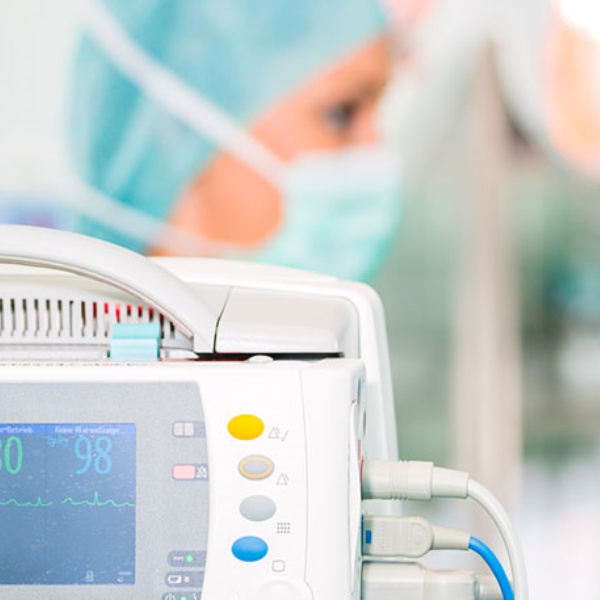
In this profile, the push-pull locking method fits a device that may be connected and disconnected during preparation, cleaning, or service. The 2–48 pin range gives the device designer room to combine signal contacts in one circular interface. The PPS/PEEK insulator and the -55°C to 250°C range are relevant when the device assembly must be validated beyond ordinary room conditions. The 5,000-cycle rating is relevant if the cable is routinely handled.
The IP50 rating of the BK-B-XXX should be read correctly. It is not an IP67 claim. If the ECG cable assembly is expected to resist liquid ingress at the connector interface, that requirement must be tested at the assembly level or addressed with a different sealed design. The correct conclusion is not that push-pull is unsuitable for medical use; it is that the ingress requirement must be matched to the specific series and assembly.
Germany and EU automation robot projects with the M12 screw-locking family
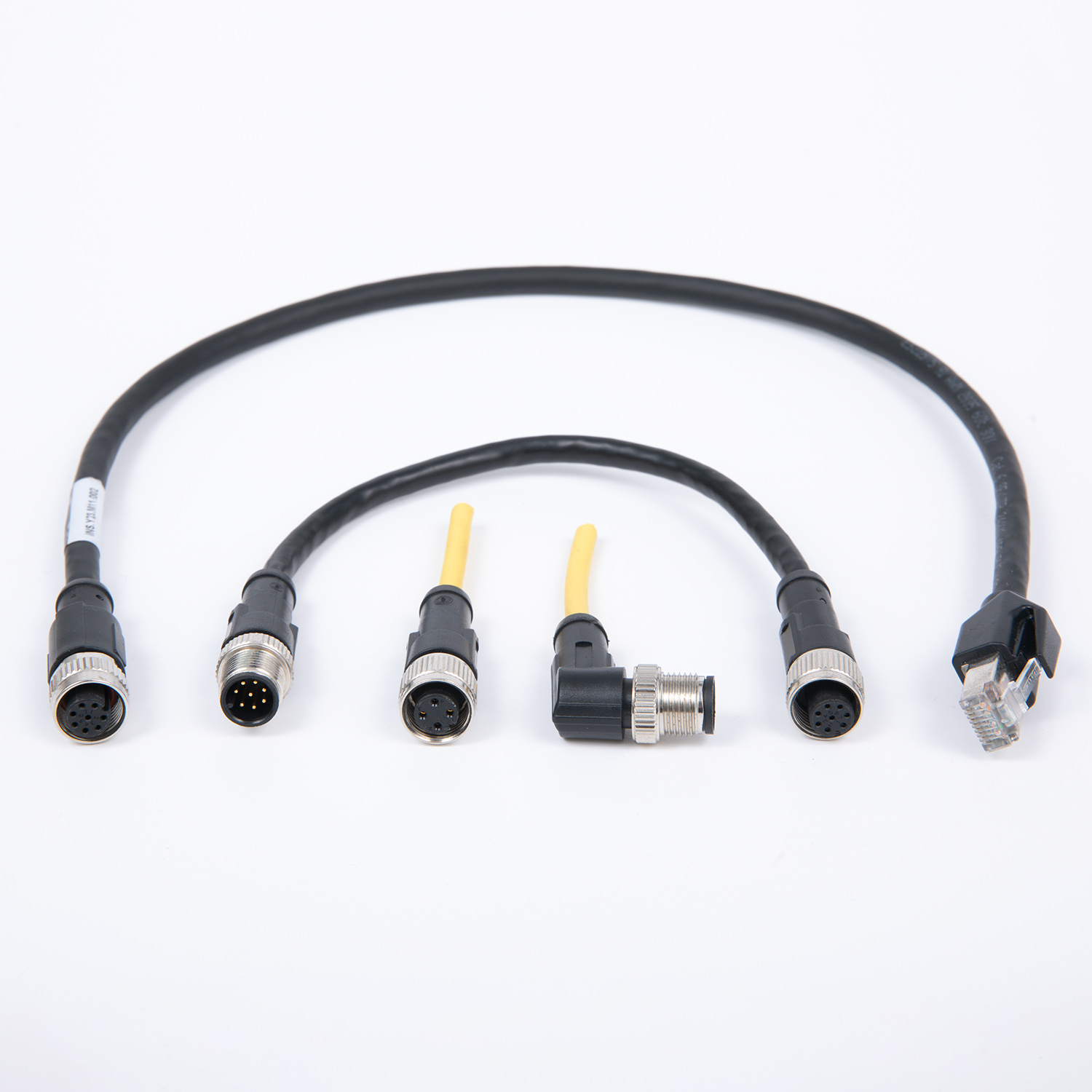
BEXKOM product 3727 is used in the industrial sector for automation robot projects in Germany and other EU regions. It operates in continuous signal transmission mode under continuous operation conditions. The product requires supporting equipment such as cable assembly and must meet special requirements including IP67 waterproof. Its role is to provide signal transmission. Product 3727 is the BK-M-XXX industrial connector family, which includes M12 connector types.

In this profile, the IP67 rating and the screw-locking interface are the decisive features. The robot cable is installed in a production environment where the connector must remain seated and the interface must resist water and dust. The BK-M12-XXX offers 3–19 pins and 1.0–16 A. If the robot project needs more pins or more current, the project should move to the BK-B-XXX push-pull series or to another BEXKOM industrial connector family, not force the M12 series beyond its published range.
The cable assembly is part of the application. A screw-locking connector with an incorrectly strain-relieved cable can still fail at the gland or overmould. The project should validate the complete cable assembly, including the connector, backshell, cable jacket, and bend relief, under continuous operation.
Comparison Table: BK-B-XXX vs BK-M12-XXX
| Selection factor | BEXKOM BK-B-XXX push-pull series | BEXKOM BK-M12-XXX M12 screw-locking series |
|---|---|---|
| Locking method | Push-pull locking | Screw locking |
| Pin count | 2–48 | 3–19 |
| Current rating | 1.5–25 A | 1.0–16 A |
| Test voltage | 450–2100 V | 250–1900 V |
| Operating temperature | -55°C to 250°C | -25°C to 80°C |
| Waterproof level | IP50 | IP67 |
| Shell material | Brass chrome plated | Brass chrome plated |
| Pin material | Brass gold plated | Brass gold plated |
| Insulator material | PPS/PEEK | PA66 |
| Mating cycles | >5,000 times | >500 times |
| Salt spray corrosion resistance | 96 hours | 48 hours |
| EMC shielding | Available | Available |
| Shock resistance | 100g/6ms | 100g/6ms |
| Vibration resistance | 10–2000 Hz, 15g | 10–2000 Hz, 15g |
| Typical fit in this comparison | Medical push pull connectors, high-cycle signal applications, wider pin and current range | Industrial automation, robot signal transmission, IP67 installations, 3–19 pin applications |
The table should be read from top to bottom as a filter, not as a scorecard. The series that covers the pin count and current is the only series that should proceed to the environmental review. After that, the IP rating and temperature range decide whether the project can use the standard series or needs a different configuration.
Decision rules for the final selection
Choose the BK-B-XXX push-pull series when:
- The project needs more than 19 pins, up to 48 pins.
- The project needs more than 16 A, up to 25 A.
- The operating temperature extends beyond -25°C to 80°C, up to -55°C to 250°C.
- The connector will be mated and unmated frequently, and the published >5,000-cycle rating is relevant.
- The application is a medical push pull connector or a high-cycle instrumentation cable.
Choose the BK-M12-XXX screw-locking series when:
- The project needs IP67 at the connector.
- The pin count is 3–19 and the current is within 1.0–16 A.
- The operating temperature is within -25°C to 80°C.
- The installation follows an M12 screw-locking procedure and the cable is expected to remain in service after installation.
- The application is an automation robot, industrial signal transmission, or a cable assembly requiring a threaded interface.
If the project needs IP67 and more than 19 pins, neither series in this pair meets both requirements as published. That is a configuration question for BEXKOM, not a reason to reinterpret the datasheet. The same applies to a project that needs IP67 and a temperature above 80°C. The correct next step is to request a technical review with the complete requirement list.
FAQ
What compliance documents should a buyer request for a medical or industrial push-pull connector project?
Request ISO9001 and ISO13485 certificates, UL recognition where applicable, REACH declarations, and RoHS evidence. For EU RoHS test evidence, request reports that reference IEC 62321-3-1:2013. BEXKOM is certified to ISO9001 and ISO13485, and its products are stated to meet RoHS, REACH, CE, UL, CSA, COC and MSDS.
Can the BK-B-XXX push-pull series handle higher pin counts and current than the BK-M12-XXX series?
Yes. The BK-B-XXX supports 2–48 pins and 1.5–25 A, while the BK-M12-XXX supports 3–19 pins and 1.0–16 A. The BK-B-XXX also has a wider operating temperature range, -55°C to 250°C, compared with -25°C to 80°C for the BK-M12-XXX. The BK-M12-XXX, however, lists IP67 protection and screw locking.
How should a buyer budget for a push-pull versus an M12 screw-locking project?
Unit pricing is configuration-specific. The available product data does not publish price bands or MOQ, so the budget should be built from a quoted configuration that includes pin count, insulator, shell plating, cable assembly, testing, and documentation. A lower pin count or a standard M12 cable assembly may have a different cost structure from a custom push-pull assembly with a higher mating-cycle requirement. Request a project-specific quotation rather than using a generic price assumption.
Can BEXKOM provide samples before a production order?
BEXKOM’s company profile describes a dedicated sample design team and a pilot production line, with prototypes typically delivered within two weeks. The sample should be used to validate mating and release force, keying, pin retention, cable assembly fit, and marking. For medical projects, the sample should be reviewed together with the device-level validation plan.
What lead time should be planned for a continuous-operation medical or industrial project?
Standard production lead time is not published in the available source material. The practical approach is to request a written delivery schedule with the quotation, covering sample approval, cable assembly, testing, and documentation. For projects that need a sample first, plan the prototype timeline separately from the production schedule. Contact BEXKOM at cs6@bexkom.com, +86 400 9969691, or WhatsApp +86 18681568601 to confirm the schedule for the selected series.
Conclusion: select by project envelope, then validate the assembly
The BK-B-XXX push-pull series and the BK-M12-XXX screw-locking series are not interchangeable defaults. The push-pull series covers a wider electrical and temperature envelope: 2–48 pins, 1.5–25 A, -55°C to 250°C, and more than 5,000 mating cycles, with a PPS/PEEK insulator and IP50 protection. The M12 screw-locking series covers 3–19 pins, 1.0–16 A, -25°C to 80°C, IP67 protection, and more than 500 mating cycles, with a PA66 insulator.
For a U.S. ECG monitoring project, the BK-B-XXX push-pull series is the relevant starting point because the application requires low-power continuous signal transmission, reliable contact, and medical-grade requirements. For a German or EU automation robot project with continuous signal transmission and an IP67 requirement, the M12 screw-locking family is the relevant starting point. In both cases, the connector must be validated as part of the cable assembly, not as an isolated part number.
The final selection file should contain the drawing, the datasheet, the sample approval, the ISO9001 and ISO13485 certificates, the UL recognition where applicable, the REACH declaration, and the RoHS test evidence referencing IEC 62321-3-1:2013. That file gives the project team a traceable decision instead of a preference-based one.
Next step: sample, drawing, or quotation
Send the project requirement to BEXKOM with the pin count, current, operating temperature, IP rating, and cable assembly details. The team can confirm whether the BK-B-XXX push-pull series or the BK-M12-XXX screw-locking series fits the application, and arrange a sample for validation.
Email: cs6@bexkom.com · Tel: +86 400 9969691 · WhatsApp: +86 18681568601 · Website: www.bexkom.com
Download the BEXKOM brochure: BEXKOM product brochure (PDF)
Have Questions or Need More Details?
Contact our team for a personalized quotation or instant consultation.
Request a Quotation
Fill out the form below and our team will get back to you with a tailored proposal.
WhatsApp Direct Chat
Prefer to chat in real-time? Message us on WhatsApp for instant assistance & quick answers.
- Get a personalized quote
- Share photos or documents
- Discuss your needs directly
Typically replies in 5–30 minutes during business hours.