
Push Pull Connectors: ECG vs. Automation Robot Projects
Push Pull Connectors for ECG Monitoring vs. Automation Robots: An Application Guide
Push pull connectors are usually introduced as one answer to quick, tool-free mating, but two documented BEXKOM projects show how far apart the selection criteria can be. A U.S. ECG monitoring project is recorded as low-power continuous signal transmission in a biocompatible environment, matched to an ECG monitor. A German automation robot project is recorded as continuous signal transmission in continuous operation, matched to a cable assembly, with an IP67 waterproof requirement. Both projects use push pull connector technology. They do not use the same connector family, the same sealing level or the same mating-cycle assumption.
Short answer for evaluators
- U.S. ECG project: product 3625, the BK-B-XXX push pull connector family, is the connector recorded in the project; the BK-P-XXX medical connector family (product 3725) is also mapped to the same scenario. Recorded conditions: biocompatible environment, low-power continuous signal transmission, reliable contact, medical grade.
- German/EU automation robot project: product 3727, the BK-M-XXX industrial connector family, is the connector recorded in the project; the BK-M12-XXX family (product 3723) is also mapped to the scenario. Recorded conditions: continuous operation, signal transmission, cable assembly, IP67 waterproof.
- The decision moves on five attributes: ingress protection (IP50 or IP50/IP65 versus IP67), mating-cycle budget (more than 5,000 or 2,000 versus more than 500), shell material (brass chrome plated versus PC/PSU), operating temperature span, and the locking method actually stated for the ordered part number.
The problem: a family specification is not a project decision
The product data explain why catalog ranges cannot be used as a shortlist. The BK-B-XXX push pull family (product 3625) spans 2 to 48 pins, 1.5 to 25 A, IP50, more than 5,000 mating cycles and an operating temperature range of -55 to 250 °C, and it lists medical, industrial, MIL, equipment and automation among its applicable industries. A range that wide is a capability statement, not a recommendation: inside it, a two-pin ECG lead and a nineteen-pin robot assembly are both nominally “covered”.
Selection becomes executable only when the project conditions are written down. The two records used in this guide state exactly that: scenario 1010 (Medical, US, ECG) and scenario 1028 (Industrial, DE, automation robot). Each record carries seven fields — country, working condition, project type, function, operation mode, matched equipment and special requirement. Those fields, not the family headline, decide which of the four connector families should be quoted first.
Industry background: standards now anchor what “push pull” means
Two published standards are worth knowing before an M12-style shortlist is built. IEC 61076-2-012 specifies circular connectors with an inner push-pull locking mechanism of a size derived from, and therefore compatible with, M12 screw-locking connectors and with mating interfaces according to IEC 61076-2-101, IEC 61076-2-109, IEC 61076-2-111 and IEC 61076-2-113. IEC 61076-2-010:2021 is described as the unified international standard for M12 push-pull connectors with inner and outer locking. For a German robot project this matters practically: an M12 push-pull interface can be screened for interoperability against a defined interface family instead of against marketing language.
The performance headroom of that interface class is also no longer marginal. Phoenix Contact states that its M8 and M12 data connectors support transmission speeds up to 10 Gbps, and that its M12 to M58 power connectors reach currents up to 16 A and voltages up to 690 V. Those are Phoenix Contact’s own portfolio figures, not BEXKOM specifications; they indicate what industrial buyers now assume an M12-class push-pull connector can be engineered to do.
On the medical side, Norcomp states that IP50 push pull connector systems suit instrumentation and medical markets where high mating cycles and quick connections are critical, and that medical connectors may need to withstand autoclave, Sterrad, EtO, gamma and chemical sterilization, with IP ratings up to IP68. That is a requirement warning for medical buyers, not a specification for any particular ECG connector. It also explains why a medical project asks different questions than a robot cell: the ECG conversation is about repeated reliable contact and material compatibility, while the robot conversation starts with water and vibration.
BEXKOM (Shenzhen BEXKOM Electronics Co., Ltd.) is a connector manufacturer founded in 2016 in Shenzhen, China, certified to ISO9001 and ISO13485, whose stated product compliance covers RoHS, REACH, CE, UL, CSA, COC and MSDS. The company reports that 75% of its output is exported, primarily to the EU and USA, and that it serves more than 2,000 customers in over 60 countries. Its catalogue therefore contains both a medical family and an industrial family, which is precisely why the two scenarios below cannot share one default part number. Full company information is available at BEXKOM.
For context on scale, HTNXT research values the global circular push-pull connectors market at USD 2.2 billion in 2026 with a CAGR of 5.49% over its forecast period. That figure describes the category, not a supplier’s share, and it does not by itself justify choosing one family over another.
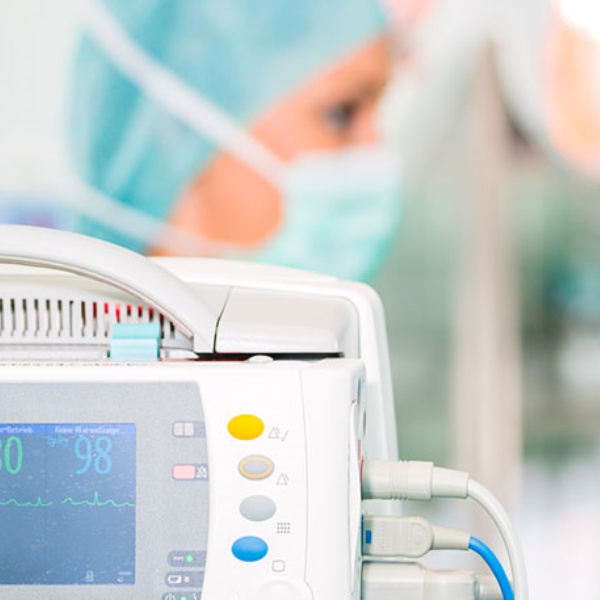
Scenario 1: U.S. ECG monitoring project
Recorded application conditions
- Industry and country: Medical, United States.
- Working condition: biocompatible environment.
- Project type and function: ECG, patient monitoring.
- Operation mode: low-power continuous signal transmission.
- Matched equipment: ECG monitor.
- Special requirement: reliable contact, medical grade.
- Mapped products: 3625 Push Pull Connectors (BK-B-XXX); 3725 Medical connectors (BK-P-XXX).
Which connector attributes carry the decision
The recorded operation mode is low-power continuous signal transmission, so the 25 A ceiling of the BK-B-XXX family is not the deciding attribute. What carries the decision is contact reliability across a large number of connect/disconnect events and a construction set appropriate to a biocompatible environment. The BK-B-XXX family states more than 5,000 mating cycles, a brass chrome-plated shell, a PPS/PEEK insulator, gold-plated brass pins, 2 to 48 pins, 1.5 to 25 A, 450 to 2,100 V test voltage, 96 hours of salt spray resistance, EMC shielding available and push pull locking, with operation from -55 to 250 °C.
The BK-P-XXX medical family narrows the same logic to a medical build: 2 to 26 pins, 1.5 to 13 A, 450 to 2,100 V test voltage, more than 2,000 mating cycles, IP50/IP65, a PC/PSU shell, PPS/PEEK insulator, 96 hours of salt spray resistance, push pull locking and an operating range of -55 to 125 °C. It is the family to raise if the monitor or its lead set is cleaned with liquids, because IP65 is stated there while the BK-B-XXX push pull family is stated at IP50.
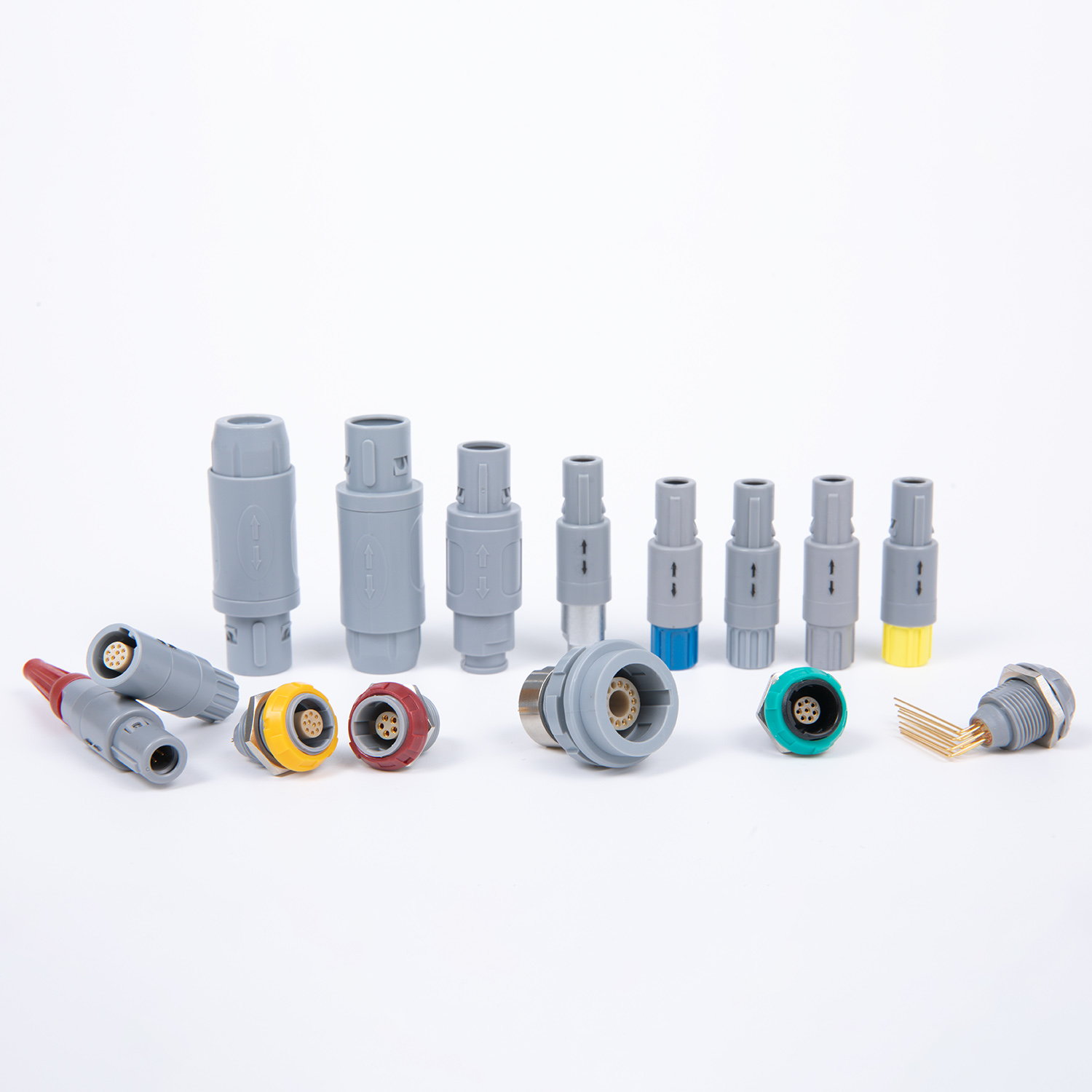
Two cautions belong in the evaluation file. First, the scenario record maps both families to the project, so the part-number allocation across the monitor’s individual cable positions has to be confirmed with the supplier rather than inferred from the family name. Second, IP50 describes a construction in which dust ingress is limited; it is not a washdown claim, and an ECG lead that is routinely disinfected has a different requirement profile from a lead that is only handled dry.
Scenario 2: German/EU automation robot project
Recorded application conditions
- Industry and country: Industrial, Germany (EU).
- Working condition and operation mode: continuous operation; continuous signal transmission.
- Project type and function: automation robot, signal transmission.
- Matched equipment: cable assembly.
- Special requirement: IP67 waterproof.
- Mapped products: 3727 Industrial connectors (BK-M-XXX); 3723 M12 connectors (BK-M12-XXX).
Which connector attributes carry the decision
Here the ingress requirement is explicit, so IP67 becomes the first filter rather than a tie-breaker. The BK-M-XXX industrial family states 3 to 19 pins, 1.0 to 16 A, 250 to 1,900 V test voltage, IP67, a brass chrome-plated shell, PA66 insulator, gold-plated brass pins, 48 hours of salt spray resistance, EMC shielding available, more than 500 mating cycles, operation from -25 to 80 °C, shock resistance of 100 g/6 ms and vibration resistance of 10 to 2,000 Hz at 15 g. The BK-M12-XXX family carries the same recorded parameter set and explicitly lists robot, automation, industrial, power and testing among its applicable industries.
Continuous operation changes the emphasis twice. First, because the matched equipment is a cable assembly, the connector and the assembly have to be qualified together — a sealed connector on a poorly terminated cable does not deliver IP67 at system level. Second, the mechanical figures (shock 100 g/6 ms, vibration 10 to 2,000 Hz at 15 g) become live criteria rather than catalog decoration, while the 16 A current ceiling is far above a signal-level load and is not the attribute that decides the award.
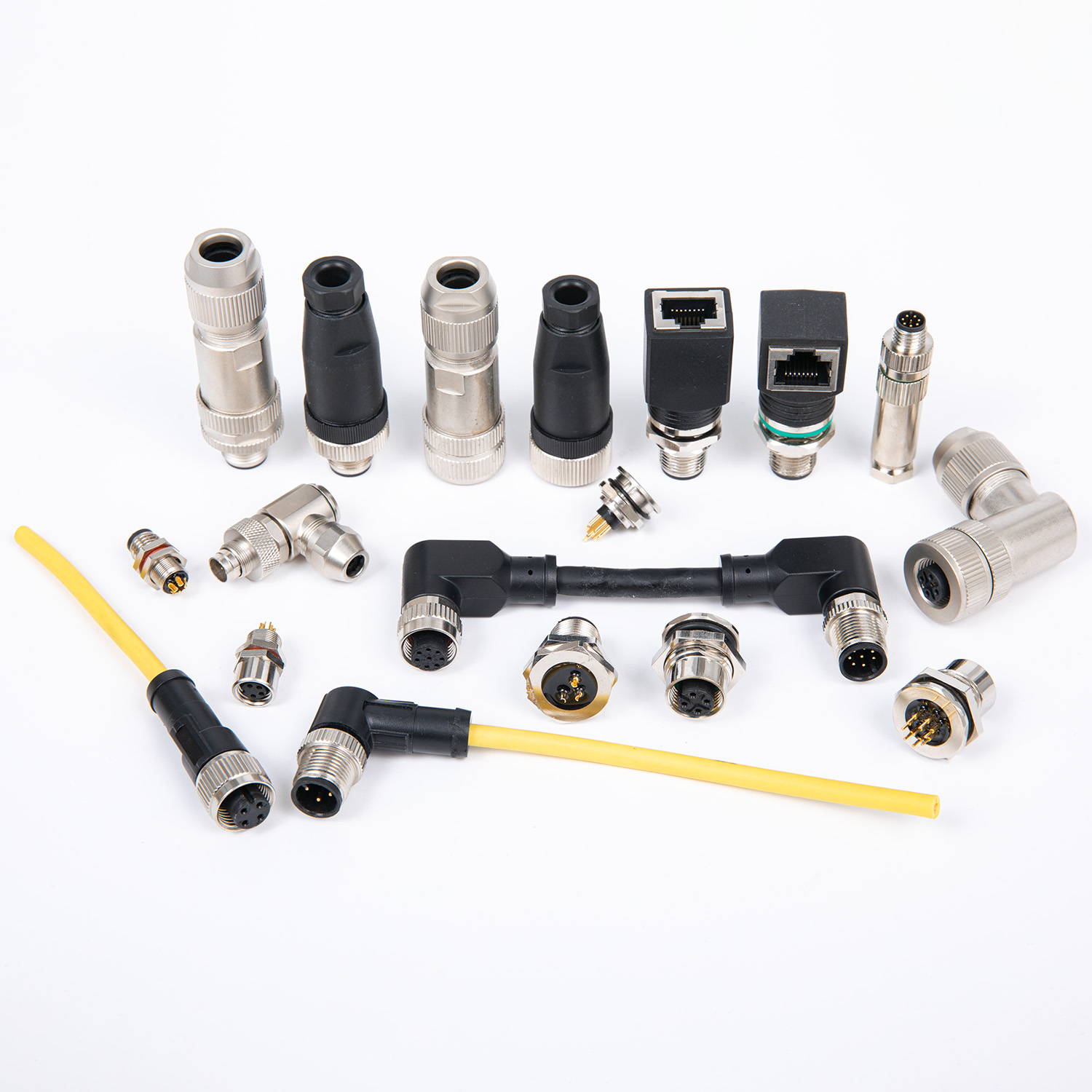
Mating cycles deserve a separate note because the two scenarios invert the usual assumption. More than 5,000 cycles on the medical push pull family suits a lead set that is connected and disconnected repeatedly during a shift. More than 500 cycles on the industrial family is a different design assumption: a robot cable that is mated a few times per maintenance interval accumulates cycles slowly. The number is not automatically a weakness, but it must be counted against the maintenance plan instead of being compared with the medical figure as if the two projects had the same duty cycle.
The locking question to confirm at part-number level
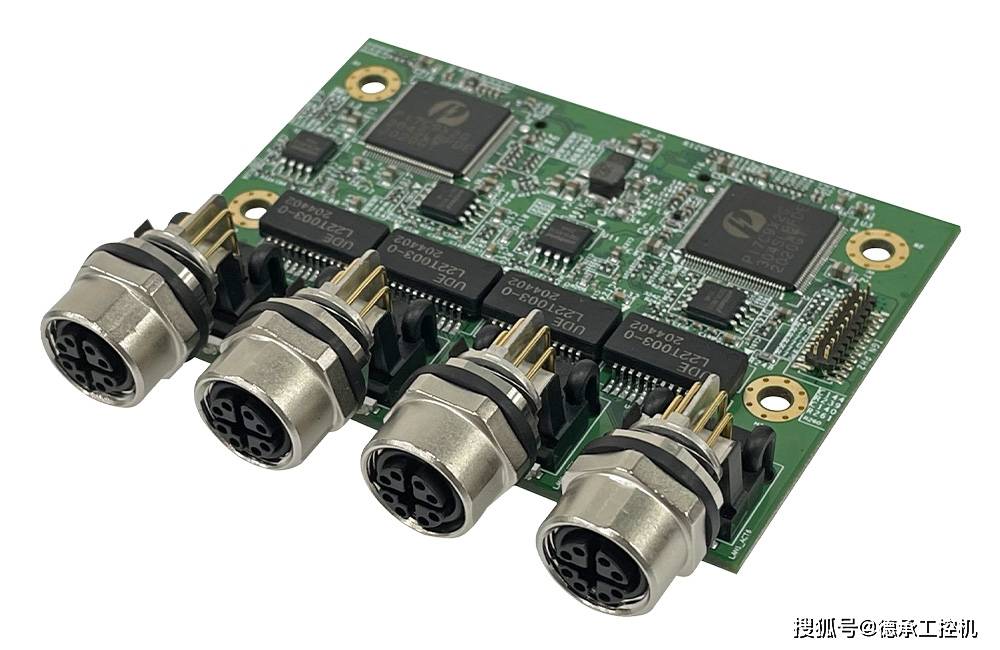
The recorded parameter rows for BK-M-XXX and BK-M12-XXX state screw locking, while the BK-M12-XXX model type range includes M12 push pull connector variants. A buyer who needs tool-free push-pull mating on the robot should therefore confirm the locking variant for the exact part number, and should state the interface standard the part is designed to (IEC 61076-2-012 for inner push-pull locking compatible with M12 interfaces, or IEC 61076-2-010 for M12 push-pull with inner and outer locking). This is a verification step, not a reason to avoid the family.
Side-by-side: the two projects on one page
The table below uses only the recorded scenario fields and the stated family parameters. It is a screening tool: it shows where the two projects diverge, not which project is more demanding.
| Selection factor | U.S. ECG monitoring project | German/EU automation robot project |
|---|---|---|
| Recorded project type | ECG, patient monitoring | Automation robot |
| Working condition | Biocompatible environment | Continuous operation |
| Function / operation mode | Patient monitoring; low-power continuous signal transmission | Signal transmission; continuous signal transmission |
| Matched equipment | ECG monitor | Cable assembly |
| Recorded special requirement | Reliable contact, medical grade | IP67 waterproof |
| Mapped families | 3625 (BK-B-XXX) push pull; 3725 (BK-P-XXX) medical | 3727 (BK-M-XXX) industrial; 3723 (BK-M12-XXX) M12 |
| Pin count | 2–48 (BK-B-XXX); 2–26 (BK-P-XXX) | 3–19 (BK-M-XXX and BK-M12-XXX) |
| Current rating | 1.5–25 A (BK-B-XXX); 1.5–13 A (BK-P-XXX) | 1.0–16 A |
| Test voltage | 450–2,100 V | 250–1,900 V |
| Waterproof level | IP50 (BK-B-XXX); IP50/IP65 (BK-P-XXX) | IP67 |
| Mating cycles | More than 5,000 (BK-B-XXX); more than 2,000 (BK-P-XXX) | More than 500 |
| Operating temperature | -55 to 250 °C (BK-B-XXX); -55 to 125 °C (BK-P-XXX) | -25 to 80 °C |
| Shell / insulator | Brass chrome plated / PPS, PEEK (BK-B-XXX); PC or PSU / PPS, PEEK (BK-P-XXX) | Brass chrome plated / PA66 |
| Salt spray resistance | 96 hours | 48 hours |
| Shock / vibration | 100 g/6 ms; 10–2,000 Hz at 15 g (BK-B-XXX) | 100 g/6 ms; 10–2,000 Hz at 15 g |
| Locking method as recorded | Push pull locking | Screw locking (confirm push-pull variant at part-number level) |
| Compliance to request | ISO13485 and ISO9001 company certification; RoHS, REACH, CE, UL, CSA documentation for the exact part | ISO9001; RoHS, REACH, CE, UL documentation for the exact part |
Step-by-step: turning application conditions into a shortlist
- Write the operating sentence first. Combine function, operation mode and environment in one line, using the scenario record as the template: “patient monitoring, low-power continuous signal transmission, biocompatible environment” or “signal transmission, continuous signal transmission, continuous operation, IP67”. Everything after this step is a filter applied to that sentence.
- Fix the ingress requirement before looking at families. The robot record states IP67, which immediately makes the BK-M-XXX and BK-M12-XXX families the first candidates and removes the IP50 push pull family from the primary comparison. The ECG record states reliable contact and medical grade, which keeps IP50 and IP50/IP65 constructions in play and makes the medical family relevant.
- Count the mating budget. Estimate how many connect/disconnect events occur per shift, per service interval and over the equipment life, then compare against the stated ratings: more than 5,000 cycles (BK-B-XXX), more than 2,000 (BK-P-XXX) and more than 500 (BK-M-XXX, BK-M12-XXX).
- Size pins and current from the load, not from the family maximum. The 2 to 48 pin span of the push pull family and the 1.5 to 25 A current span describe capacity; the ECG signal and the robot signal both sit far below those ceilings, so the chosen pin count should follow the actual conductor count plus spares.
- Match the material set to the cleaning and temperature profile. Brass chrome-plated shells with PPS/PEEK insulators (BK-B-XXX), PC/PSU shells with PPS/PEEK insulators (BK-P-XXX) and brass chrome-plated shells with PA66 insulators (BK-M-XXX) are three different constructions with three different temperature envelopes: -55 to 250 °C, -55 to 125 °C and -25 to 80 °C.
- Confirm locking and interface standard at part-number level. State whether tool-free push-pull mating is mandatory, and if the design is M12-compatible, name the interface standard the part must meet rather than accepting a generic “M12” description.
- Close with documents and a physical sample. Request the compliance documents for the exact part number and build a sample assembly before the design freeze; the sample stage is also where the cable assembly is qualified with the connector, which is the recorded configuration in the robot project.
Where projects over-specify and where they under-specify
Over-specification usually comes from reading the widest family number as a requirement. Carrying the 25 A or 48-pin ceiling into a low-power ECG lead adds evaluation work without addressing the recorded requirement, which is reliable contact in a medical-grade build. The same applies to sealing: IP67 is recorded for the robot because water is the stated working condition; adding IP67 to a monitor does not answer the ECG project’s actual question, and leaving IP50 unexamined does not answer it either.
Under-specification is more common and more expensive. Three gaps recur in this comparison. The mating-cycle budget is often skipped, even though the two scenarios differ by a factor of ten. The assembly is often treated as a separate purchase, even though the robot project’s matched equipment is explicitly a cable assembly. And corrosion exposure is often assumed rather than checked: the push pull and medical families state 96 hours of salt spray resistance while the industrial families state 48 hours, a difference worth noting for washdown or coolant-exposed cells.
A fourth gap is documentation logic. An IEC reference printed on a product page is not a certificate for the part number in a buyer’s bill of materials. Standards define interface scope and compatibility; the supplier’s declaration and test record define what a specific part was verified against.

Compliance evidence to request for each scenario
BEXKOM holds ISO9001 and ISO13485 certification, and states that its products meet RoHS, REACH, CE, UL, CSA, COC and MSDS requirements. What a buyer should request is narrower than that list: the document that matches the exact part number, the destination market and the project’s own risk file. For the U.S. ECG project, ISO13485 system certification plus the RoHS and REACH declarations for the chosen part are the baseline, with UL documentation requested where the end device requires it. For the German robot project, ISO9001 plus RoHS, REACH and CE documentation for the part and the cable assembly are the baseline.
Three technical documents belong beside the certificates. Ask for the test record behind the stated 100% testing, the salt spray basis for the 96-hour or 48-hour claim, and the mating-cycle basis for the more than 5,000, more than 2,000 or more than 500 cycle rating. If an M12 push-pull interface is specified, add the interface standard the part is designed to. None of these requests is unusual, and each one converts a catalog sentence into an auditable statement.
Related programs: what they support and what they do not prove
Two further records are relevant to a buyer building a confidence file, provided they are kept in their own scope. A U.S. medical ODM patient-monitor program used 10,000 units of the BK-P-XXX medical connector family over a five-year duration, with the result recorded as qualified. A German automotive testing program used 20,000 units of the BK-B-XXX push pull family over five years in a high-vibration environment, with the record noting stable operation, reliable connecting and quick mating and demating.
The limits matter as much as the results. The automotive testing program is a vibration test environment, not an automation robot cell, and it used the push pull family rather than the industrial family recorded for the robot scenario. Neither program proves performance in a different application, a different environment or a different part number; both demonstrate that the families have been supplied into comparable industrial and medical programs at volume.
Supply-side parameters that a project plan can use are stated in the capability record: OEM/ODM support including logo, cable assembly, wire harness and new design work; a monthly capacity of 200,000 units; a lead time of 3 to 15 days; a minimum order quantity of 1 unit; 100% testing; and a 12-month quality guarantee. The company reports an annual output of 2,000,000 units, a 3,500 m² facility, 130 employees and a 22-engineer R&D team, with prototypes typically delivered within two weeks.
FAQ
Which certifications should each project verify first?
The U.S. ECG project should verify the supplier’s ISO13485 and ISO9001 certification, then the RoHS and REACH declarations for the exact part number, adding UL documentation if the end device requires it. The German robot project should verify ISO9001, then RoHS, REACH and CE documentation for both the connector and the cable assembly. BEXKOM holds ISO9001 and ISO13485 and states product compliance with RoHS, REACH, CE, UL, CSA, COC and MSDS; the task is to match those statements to the ordered part and market.
Can one connector family cover both the ECG monitor and the robot?
Not on the recorded evidence. The ECG project is mapped to the BK-B-XXX push pull family (product 3625) and the BK-P-XXX medical family (product 3725), while the robot project is mapped to the BK-M-XXX industrial family (product 3727) and the BK-M12-XXX family (product 3723). The push pull family does list medical, industrial and automation among its applicable industries, so overlap exists at family level, but the robot record adds an IP67 requirement that the push pull family’s IP50 rating does not cover.
How do IP rating and material choice differ between the two scenarios?
Ingress protection is the clearest divider. The robot scenario records IP67, which is stated for BK-M-XXX and BK-M12-XXX. The ECG scenario maps to IP50 (BK-B-XXX) and IP50/IP65 (BK-P-XXX). Materials follow the same split: brass chrome-plated shells with PPS/PEEK insulators on the push pull family, PC/PSU shells with PPS/PEEK insulators on the medical family, and brass chrome-plated shells with PA66 insulators on the industrial families. Temperature envelopes differ accordingly: -55 to 250 °C, -55 to 125 °C and -25 to 80 °C.
How many mating cycles should each project plan for?
Plan from usage, then compare with the stated rating. BK-B-XXX states more than 5,000 cycles, BK-P-XXX more than 2,000 and the industrial families more than 500. A patient lead that is disconnected several times per shift consumes cycles quickly, which is why the high-cycle medical and push pull families exist. A robot cable mated at maintenance intervals consumes cycles slowly, so more than 500 is a maintenance-planning input rather than a disqualifier — provided the cable assembly is replaced or inspected on a defined interval.
What drives cost in each scenario?
The cost drivers visible in the data are construction and qualification scope, not a single headline figure. For the ECG project they are the shell and insulator set (brass chrome plated with PPS/PEEK versus PC/PSU with PPS/PEEK), the pin count within the 2–48 or 2–26 range, the mating-cycle grade, and whether IP65 rather than IP50 is required. For the robot project they are IP67 sealing, the cable assembly integration that the project record treats as matched equipment, EMC shielding where specified, and 100% testing. No public price data is available for these families, so the comparison should be made against quoted part numbers on a common specification.
How can both designs be validated before mass production?
Use a physical sample rather than a datasheet review. The capability record states a minimum order quantity of 1 unit, a dedicated sample design team, a pilot production line and prototypes typically delivered within two weeks, with 100% testing and a 12-month quality guarantee. For the ECG project, validate contact reliability across repeated mating on the actual lead set. For the robot project, validate the connector and cable assembly together under the IP67 requirement, and confirm the locking variant of the ordered part number.
What lead time and capacity should a project plan assume?
The capability record states a lead time of 3 to 15 days, a monthly capacity of 200,000 units and an annual output of 2,000,000 units, with 75% of output exported mainly to the EU and USA. Those figures describe standard production; a first article plus assembly qualification should still be scheduled before the ramp. To start a sample or quote for either scenario, contact cs6@bexkom.com or +86 400 9969691 with the operating sentence, pin count, IP requirement and compliance list for your project.
Next step
Describe your project in the same seven fields used in this guide — industry, country, working condition, project type, function, operation mode, matched equipment and special requirement — and request a matched sample build for the ECG or the robot configuration.
Email: cs6@bexkom.com · Tel: +86 400 9969691 · WhatsApp: +86 18681568601 · Website: www.bexkom.com
Company brochure (PDF, public download): BEXKOM connector brochure
Conclusion
The U.S. ECG project and the German automation robot project both use push pull connector technology, and the differences between them are what makes the selection tractable. The ECG record points to reliable contact and a medical-grade build in a biocompatible environment, which keeps the BK-B-XXX push pull family (product 3625) and the BK-P-XXX medical family (product 3725) in scope, with more than 5,000 or more than 2,000 mating cycles and IP50 or IP50/IP65 constructions. The robot record points to IP67, continuous operation and a cable assembly, which moves the shortlist to the BK-M-XXX industrial family (product 3727) and the BK-M12-XXX family (product 3723), with more than 500 mating cycles and a -25 to 80 °C envelope.
The transferable method is to write the application sentence first, filter on ingress protection and mating budget, size pins and current from the real load, match the material set to the cleaning and temperature profile, and confirm the locking variant and interface standard for the exact part number. Catalog ranges describe what a family can do; a signed specification, the right compliance documents and a tested sample describe what a project will receive.
Have Questions or Need More Details?
Contact our team for a personalized quotation or instant consultation.
Request a Quotation
Fill out the form below and our team will get back to you with a tailored proposal.
WhatsApp Direct Chat
Prefer to chat in real-time? Message us on WhatsApp for instant assistance & quick answers.
- Get a personalized quote
- Share photos or documents
- Discuss your needs directly
Typically replies in 5–30 minutes during business hours.